Money
As in most European countries, the currency of Belgium is the euro (symbolised as EUR or €). Other currencies are normally not accepted, so be sure to change dollars, etc. at one of the many currency exchange offices located throughout the city. Many shops and restaurants in Brussels accept credit cards, but not all. It is, therefore, recommended that you either ask before you order or ensure you have enough cash to cover the bill. Most shops and restaurants do not accept €200 or €500 notes.
Withdrawing Cash
ATMs can be found around the city if you wish to withdraw cash. As anywhere, cover your hand when entering your pin details, and be aware of anyone around you.
Service and tips
Service is always included. It is however customary to tip in restaurants or bars. Generally, tipping between 5 and 10% is acceptable. But, again, this is not mandatory.
Useful information
ELECTRICITY, Mobile phone, Internet & Wi-fi
Electricity
In Belgium, power plugs and sockets (outlets) of type E are used. The standard voltage is 230 V at a frequency of 50 Hz.. Here you find more info.
Data connection
Travelling with a data connection is just so much more convenient, whether you're ordering a taxi or getting directions on Google Maps. There are a ton of reasons why it's useful to have an internet connection on your phone.
Good news! If you're European, you'll know that there are no longer any roaming charges when travelling within the European Union. In Brussels, you can, therefore, use your mobile phone subscription under the same conditions as at home. However, most restaurants, bars and hotels are happy to share their Wi-Fi if you need it. Several of Brussels' top tourist attractions also offer the free "wifi.brussels" network.
Wifi.brussels: the capital’s free Wi-Fi network
Wifi.brussels is the official free Wi-Fi network of the Brussels-Capital Region. A great many Brussels hotspots are equipped with it: squares, public places, along major roads, STIB metro stations and certain museums. How can you connect? Look for the "wifi.brussels" network, click on it and create your account. You will immediately have access to all the wifi.brussels spots in the region. You only need to do this once, the network will then recognise your device automatically.
Discover wifi.brussels hotspots
Belgian operators and SIM cards
Are you planning to stay in Belgium for a while? Take out a subscription with Orange, Proximus, Voo, Scarlet or Telenet/BASE, the five main mobile network providers in Belgium.
Great deal alert! Prepaid SIM cards are also available from authorised outlets. The advantage of Belgian cards is that there are no roaming restrictions in the EU and free roaming within the EU is included. Your Belgian SIM card is, therefore, also valid in Rome, Paris, Lisbon, Athens and even London, despite Brexit, at no extra cost!

Getting Around in Brussels
Brussels is very simple to navigate and easily accessible. If you want to travel in and around the capital, it’s better to choose soft mobility and public transport.
All conference venues are in or near the center of Brussels. All venues are also accessible by public transport. Choose between:
Public transport – Taxis – Bicycle – Scooters - Other services
At night-time too!
Planning to dance until the early hours and wondering how to get home? Or have you missed the last metro after a last drink with other delegates? Don't panic, these two initiatives will help you get home safely!
Collecto is a collective Brussels taxi service available every day, including Sundays, between 23:00 and 6:00 in the morning. From 200 pick-up points at strategic STIB-MIVB stops, passengers are taken to the Brussels address of their choice, for a flat fare of just €6.
Noctis is the STIB's nightbus service. On Friday and Saturday nights, 11 routes will take you home safely. The Noctis buses all leave from Brussels-Central station. Use your tickets or passes at no extra cost!

Weather
In Belgium and in Brussels, you'll sometimes be treated to all four seasons in one day! Now, you could say it's part of our Belgian charm.
The weather in Belgium in October is typically autumnal: changeable, cooler and wetter than in previous months. It is a transitional month in which temperatures gradually drop. During the day, the temperature is often between 10°C and 16°C. Nights become cooler, with temperatures dropping to around 5°C to 9°C. Rain and sunshine: October is a fairly rainy month, with an average of 12 to 13 rainy days. Although there are many cloudy days, there can also be beautiful, clear autumn days.
In October, it should be warm enough to wear a light cardigan or jumper, sometimes even just a t-shirt during the day if the sun appears! It is advisable to wear layers and bring an umbrella or raincoat.
In the evening you will probably need a jacket or coat, especially if you are travelling from a country with a warmer climate than Belgium’s.
Find more information about weather and a daily forecast at the website of the of the Royal Meteorological Institute of Belgium (Weather Brussels - RMI)
Public holidays and usual opening hours
It's important to know about opening hours and public holiday schedules if you don't want to be stuck in the middle of Brussels operating at a slower speed.
Usual opening hours
Shops are usually open from Monday to Saturday, from 10:00 to 18:00. On the main shopping streets and in the shopping centres, some shops open until 19:00 and, less often, until 20:00. On Sundays, the centre of Brussels is quieter, but some independent shops in certain districts are still open. This is the case, for example, in the Marolles.
Restaurants and bars have variable opening hours. On Mondays and Tuesdays, they are often closed or have reduced hours.
Museums are usually open from 10:00 to 17:00 (last entry). Please note! Most museums are closed on Mondays. Others close on Tuesdays. To find out which, visit Brussels Museums website (Homepage | Brussels Museums)
Emergency and security
Belgium is known for its warm and welcoming atmosphere. Brussels prides itself on being a safe city. However, if anything were to happen to you, you can rest assured that you will get all the help you need.
Emergency telephone numbers
If you need urgent medical attention, call 112. It’s the only emergency number that you can call, for free, throughout Europe if you need urgent help from the fire department, a medical team or the police.
Whatever the issue, numerous services are available 24/7. The Poison Centre (+32 (0)70 245 245), Card Stop for lost/stolen bank cards (+32 (0)78 170 170), suicide prevention (+32 (0)800 32 123), etc. You can find these emergency numbers and many others on the 112.be website.
Police
If you are the victim of a crime, report it to the police. If it's an emergency, call 101. You can also go to any one of the region's police stations. The Brussels-Capital Region has 6 police zones. Each of these zones includes several communes and has its own police regulations. For non-urgent situations requiring police assistance or to make an appointment to report a crime in person, use the online reporting application.
Pharmacies and on-call doctors
In urgent need of a pharmacy? Visit the website pharmacie.be.
Need an on-call doctor? Visit the website gbbw.be or call 1733.
Hospitals in the centre of Brussels
CHU Saint-Pierre – Site Porte de Hal (Emergency), 290 rue Haute, 1000 Brussels
CHU Saint-Pierre – Site César de Paepe, 13 rue des Alexiens, 1000 Brussels
Clinique Saint-Jean, 32 Boulevard du Jardin Botanique, 1000 Brussels
Institut Jules Bordet, rue Héger Bordet, 1000 Brussels
Institut Pacheco, 7 rue du Grand Hospice, 1000 Brussels
Brochures and maps
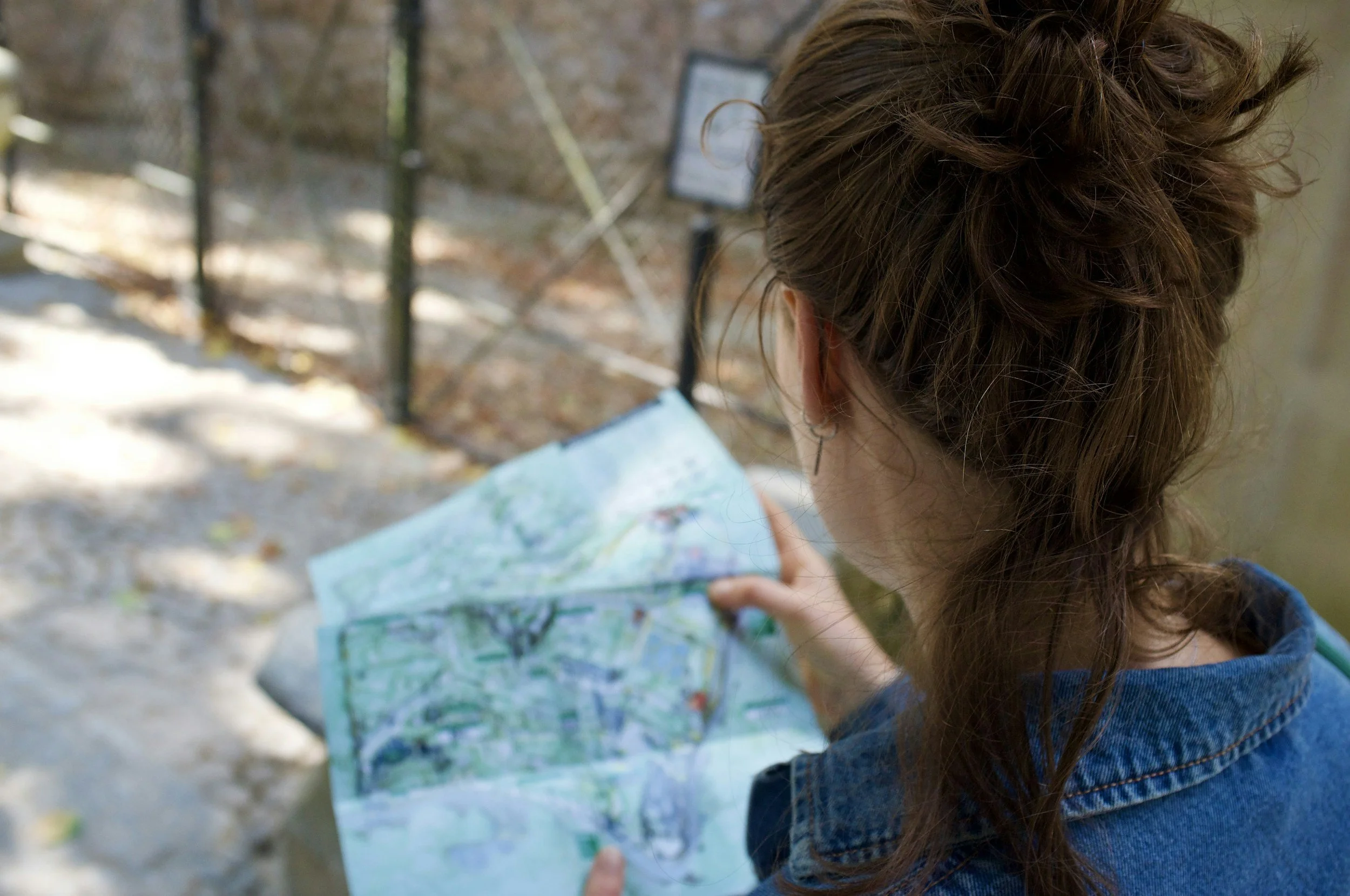
Google Maps doesn't know Brussels as well as the Brussels Tourist Info does! To guide you as you explore the region and its many treasures, they’ve put together a selection of maps and brochures that will help you discover some of our capital's best kept secrets.
These brochures and maps, which they produce themselves, are available at the reception offices on the Grand-Place and Place Royale. Not sure which one to choose? Don't hesitate to ask their welcome desk teams, they will guide you through the offer according to your interests and wants.
More info: Brochures and maps | Visit Brussels